

When Healing Took the Stage: TMHC 3.0 Sparks Conversations on Trauma, Workplace Mental Health
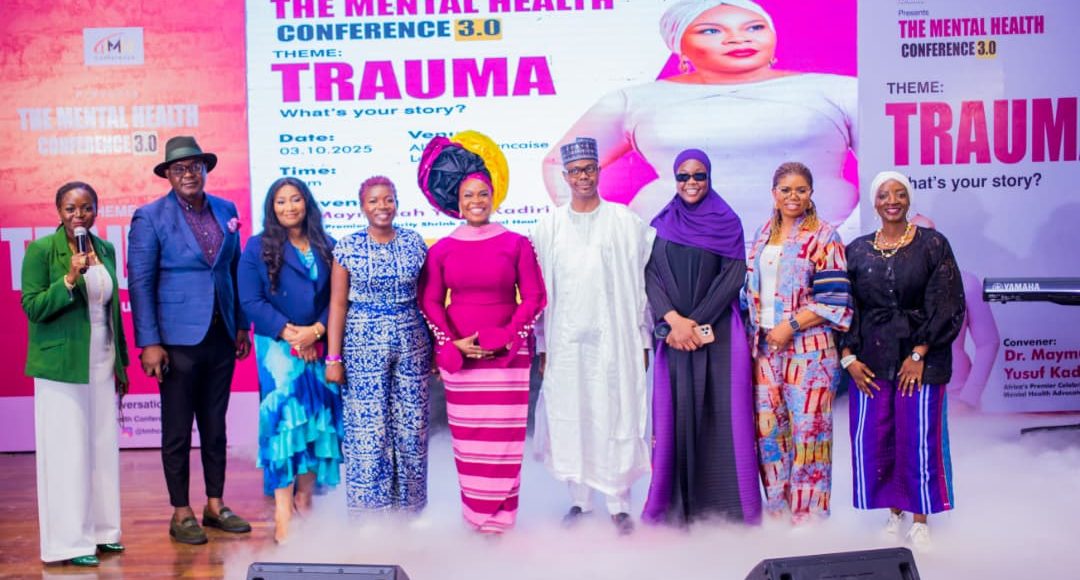
Something deeper than a conference unfolded that day in Lagos. Beneath soft lights and quiet anticipation, doctors, lawyers, entrepreneurs, artists, and advocates gathered — not just to talk, but to tell the truth. The third edition of The Mental Health Conference (TMHC), convened by psychiatrist and mental health advocate Dr. Maymunah Kadiri, became a day of shared stories, scientific insight, and soulful reckoning under the theme, “Trauma: What’s Your Story?”
With a subtheme on prioritizing mental health in the workplace, TMHC 3.0 explored how personal histories, institutional practices, and public policy intersect to shape collective well-being.
Dr. Maymunah Kadiri opened the session with a stirring reflection: “Every human soul is a library. And trauma; that one chapter some of us keep sealed shut — not because we are fragile, but because reopening it feels like touching fire with bare hands.
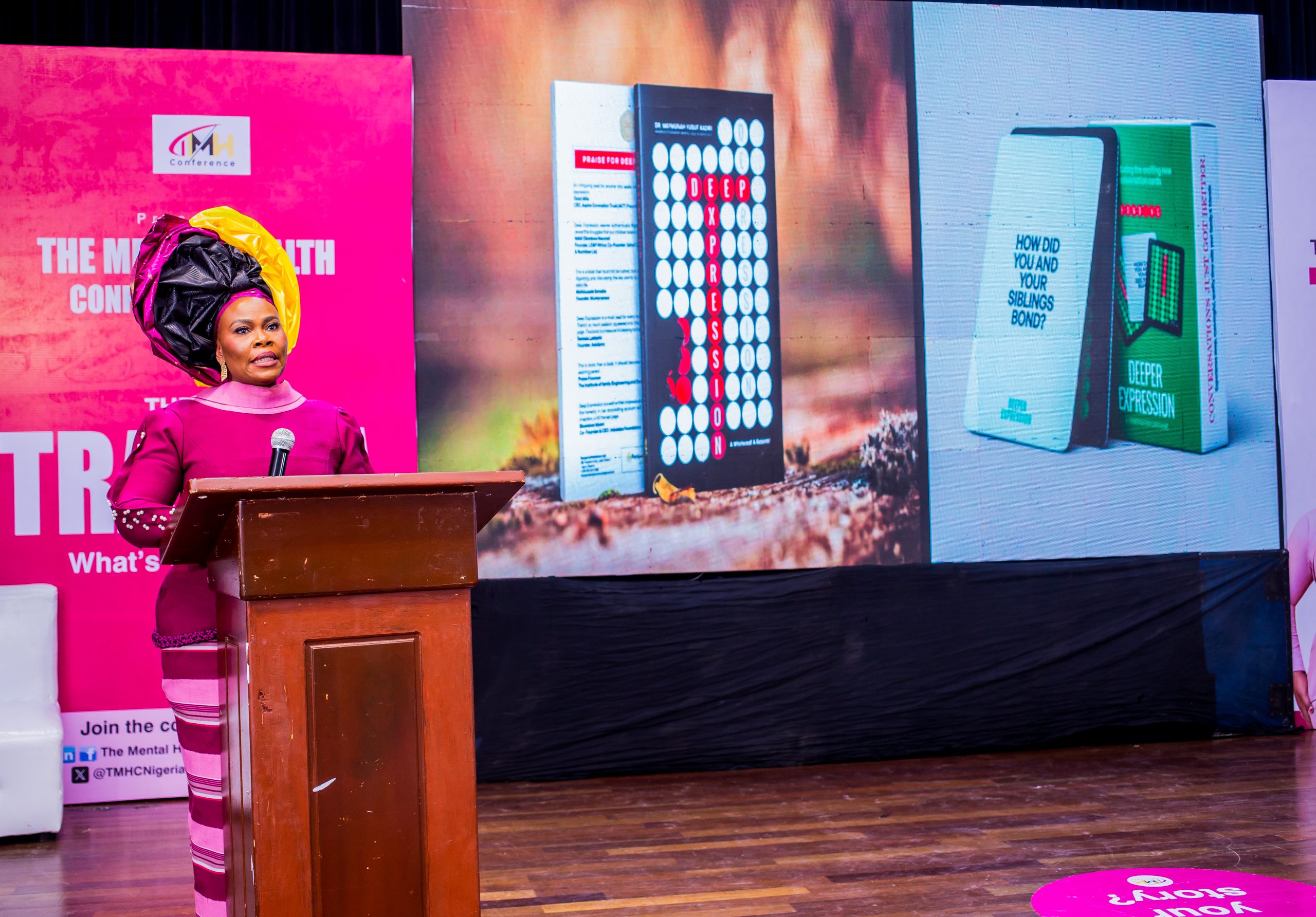
Dr Maymunah Yusuf-Kadiri
Tracing the evolution of TMHC — from “Unveiling the Mind Behind the Mask” to “Identity: Who Are You?” — she described this year’s theme as a deeper excavation into the unlit rooms of the self. “Trauma is not just what happened to you,” she said. “It’s what keeps happening inside you, long after the world thinks you should be fine.”
Her message was tender yet defiant: healing is possible. “Your story may be stained, but it is not spoiled. Your pain is part of your past, not your permanent address,” she reminded the audience. “Trauma is not a tomb — it is soil. The kind that is dark, messy, and full of decay, but also the kind where seeds take root. This conference is not just an event — it is a revolution of remembrance.”
Balancing the personal with the political, Dr. Olugbenga Owoeye, Medical Director and Consultant Neuropsychiatrist of the Federal Neuropsychiatric Hospital, Yaba, represented the Honourable Minister of State for Health, Dr. Iziaq Adekunle Salako, in a keynote titled “National Roadmap for Trauma Care and Mental Health Inclusion.”
Read Also: Echoes of Change: Mental Health Rings Loud at the Nigerian Exchange
He outlined the government’s growing commitment to mental health, announcing plans toward National Trauma Centres and psychosocial intervention units at the state level. “We are putting systems in place to ensure trauma care and mental health inclusion become national priorities,” he affirmed, framing the work ahead as both a public health and national development imperative.
In a powerful address, former President of the Nigerian Bar Association, Olumide Akpata, examined trauma through the lens of justice and governance. He argued that Nigeria’s ongoing crises — insecurity, inflation, unemployment, corruption — compound psychological harm, while mental health remains sidelined precisely because it is invisible. “When legal systems punish rather than heal, cycles of trauma are perpetuated,” he said, calling for restorative approaches and investment in infrastructure and training.
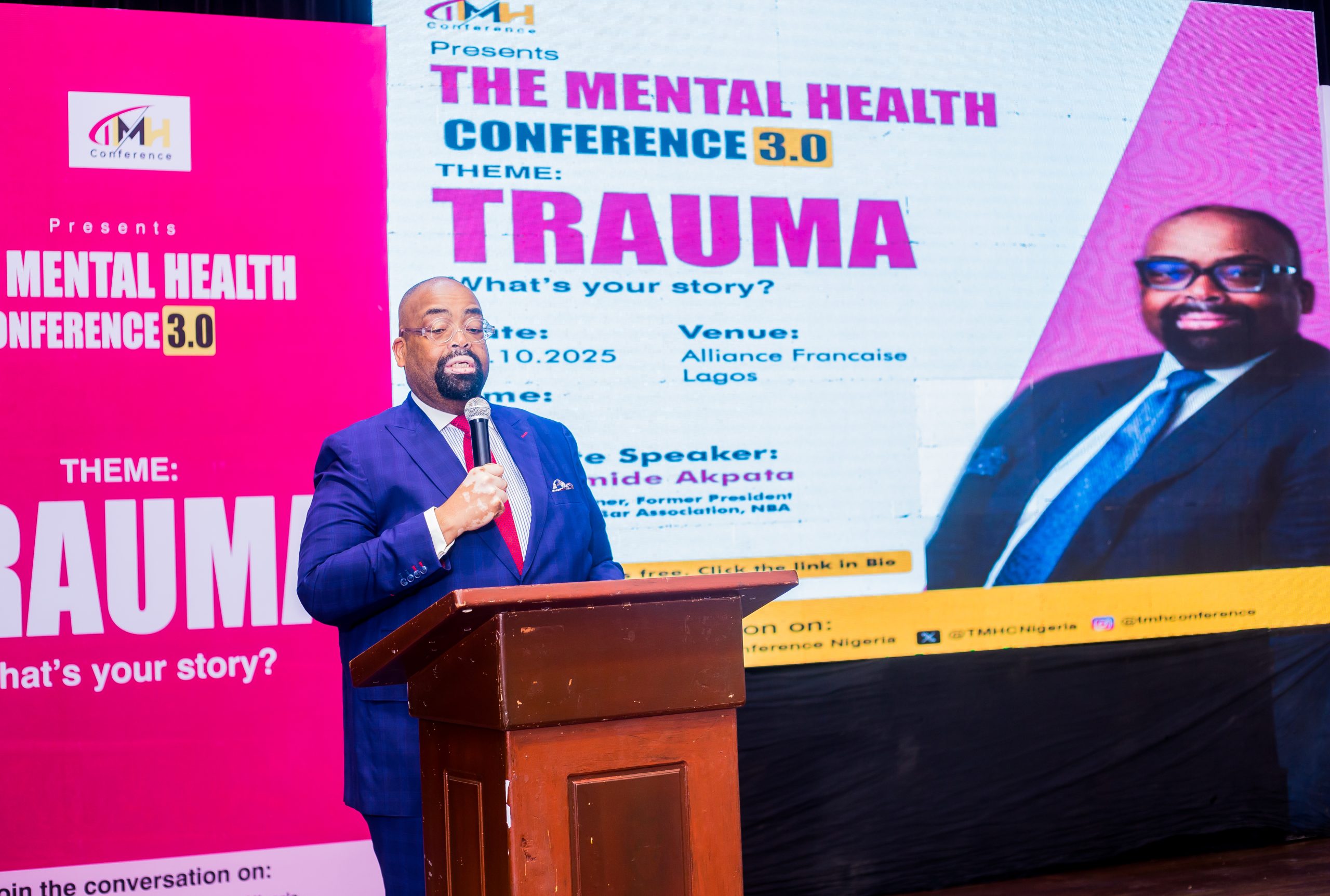
Mr Olumide Akpata
Referencing the government’s plan to decriminalize suicide by December 2025, Akpata urged for a more compassionate justice system. “True justice must be restorative, not merely punitive. A nation is only as successful as the collective mental wellness of its citizens.”
From there, the conference moved into deeply personal territory. Wale Ajiboye, Chief Curator of 16Stories, reminded participants that sometimes, the very wounds we fear can become pathways to purpose. “Sometimes our traumas are actually calling us to greatness — if we can truly see and understand them.”

Wale Ajiboye
Award winning journalist Stephanie Busari offered a poignant reflection on grief and work — navigating loss while the world kept spinning. “The news doesn’t stop, Lagos doesn’t stop, life doesn’t pause for your pain,” she said. “Grief doesn’t wait for permission, neither does trauma check your schedule.”
Rejecting the urge to package sorrow into a lesson, she reminded the audience that healing isn’t linear. “We live in a world where people feel you should find the wisdom and move on — but compound trauma doesn’t work that way. The love of God, good people, and the honesty of admitting you’re not okay — that’s what saved me.” Her final words lingered in the room: “We can all choose what to do with our pain. We can let it destroy us, or make us more human.”
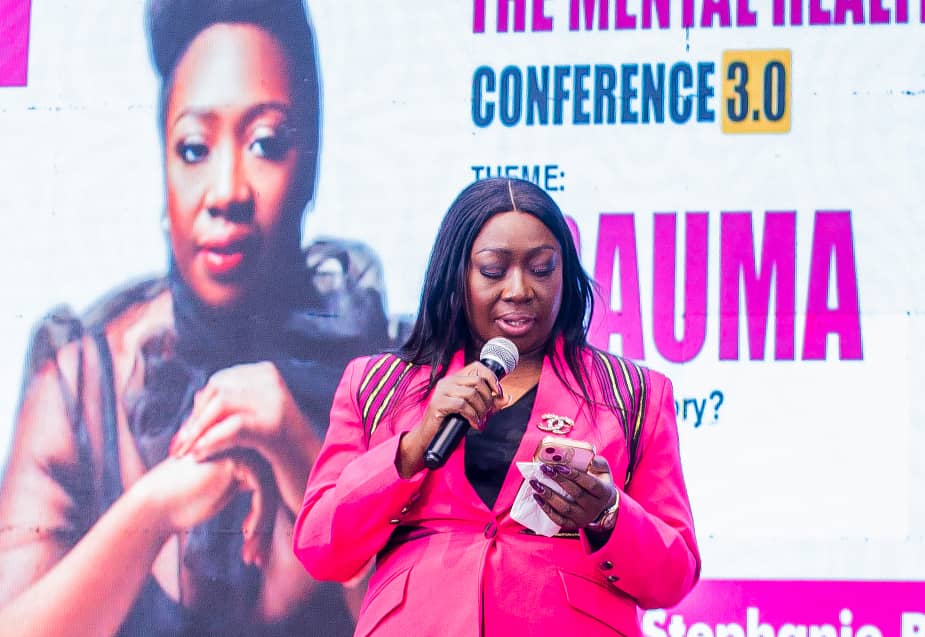
Stephanie Busari
Dr. Olasimbo Davidson led a reflective session on Adverse Childhood Experiences (ACEs), emphasizing awareness as the first step toward repair. “You can’t heal what you’re not even aware of,” she said — a truth that echoed through the day’s conversations.
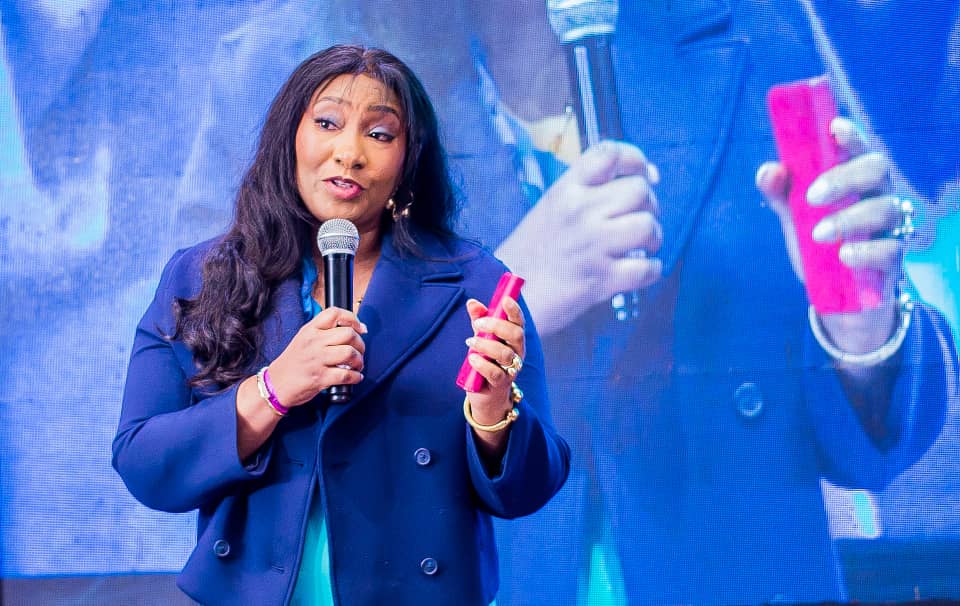
Dr. Olasimbo Davidson
In a panel on “Mental Health at the Heart of Work and Society,” Dr. Babi Awosika, Dr. Sylvanus Jatto, and Prof. Rosemary Ogu, moderated by Adeola Kingsley James, examined how workplaces can either protect or perpetuate trauma. They called for trauma-informed workplace policies, routine occupational-health practices, and accessible care pathways that embed psychological safety into organizational culture.
Another panel, “The Wellness Equation: Mind, Body & Finance,” led by Saudat Salami and featuring Temi Dalley, Foluso Ogunwale, Oghenetega Gbadagri, and Josephine Ehimen, drew the circle wider, linking physical health, financial security, and psychological resilience. Their message was clear: financial stress is not just an economic issue — it’s a mental health one. They urged employers to design benefits that make well-being sustainable, integrating physical wellness, psychosocial support, and financial literacy into corporate life.
The conference also honoured the role of art in healing. Legendary performer Yinka Davies filled the room with music — her set reminding everyone that rhythm and sound can reach the places words cannot. In her voice, the day’s message found harmony: art, too, is medicine.
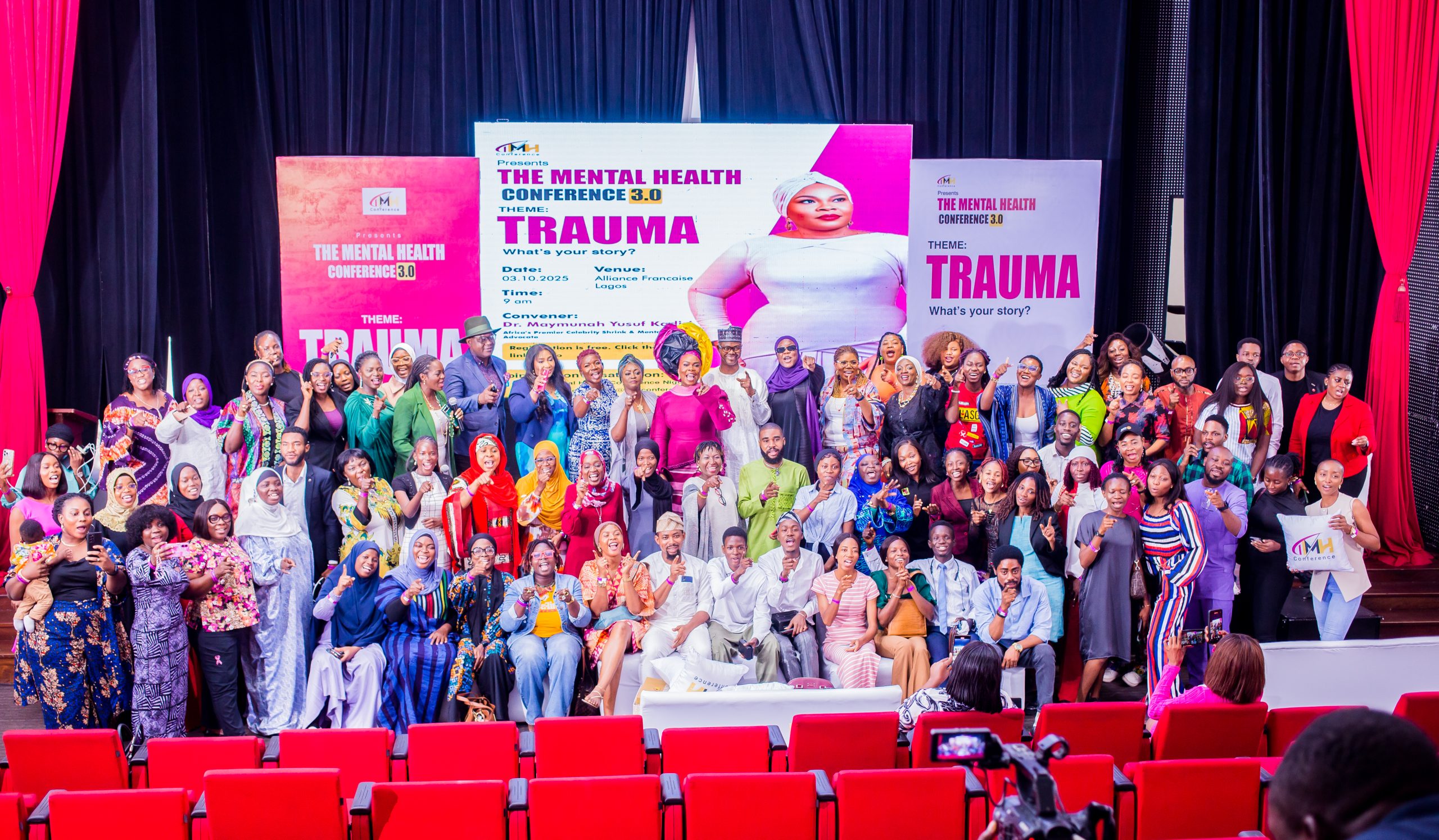
In her closing charge, Dr. May thanked speakers, partners, and attendees — but her words carried a quiet insistence that the work was far from over. “We’ve begun a necessary conversation — one that can no longer be silenced. Next year, TMHC 4.0 will continue this journey into collective care, healing, and mental well-being.”
And with that, she left the audience with a truth that resonated long after the applause: “Healing begins when we stop running from our stories and start rewriting them.”
Leave a Comment